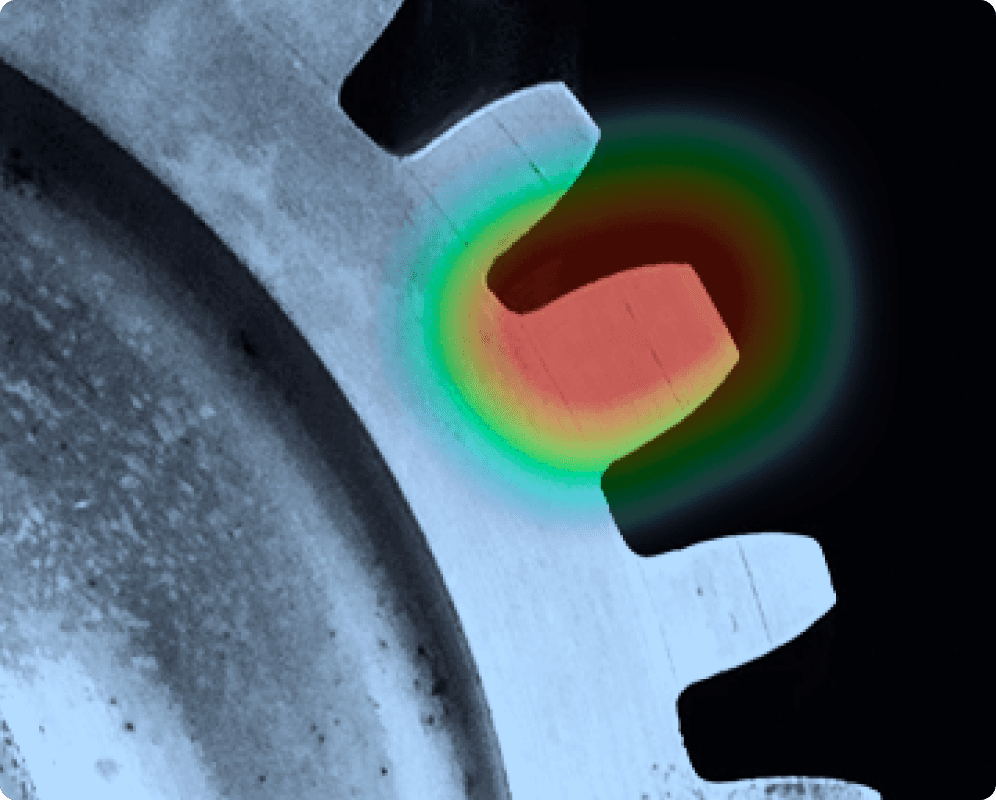
Classification
Classifies images to multiple defect categories.
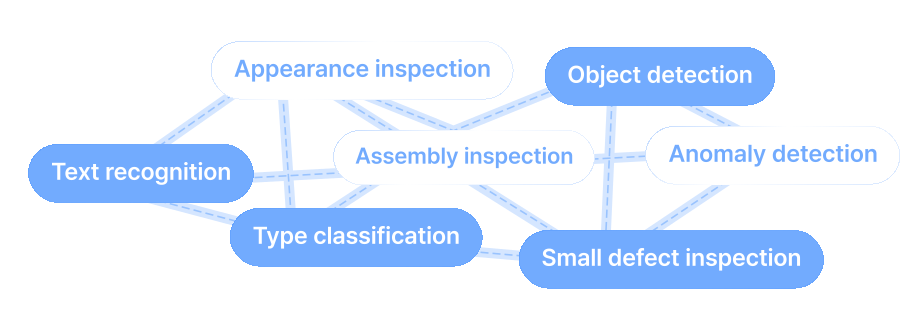
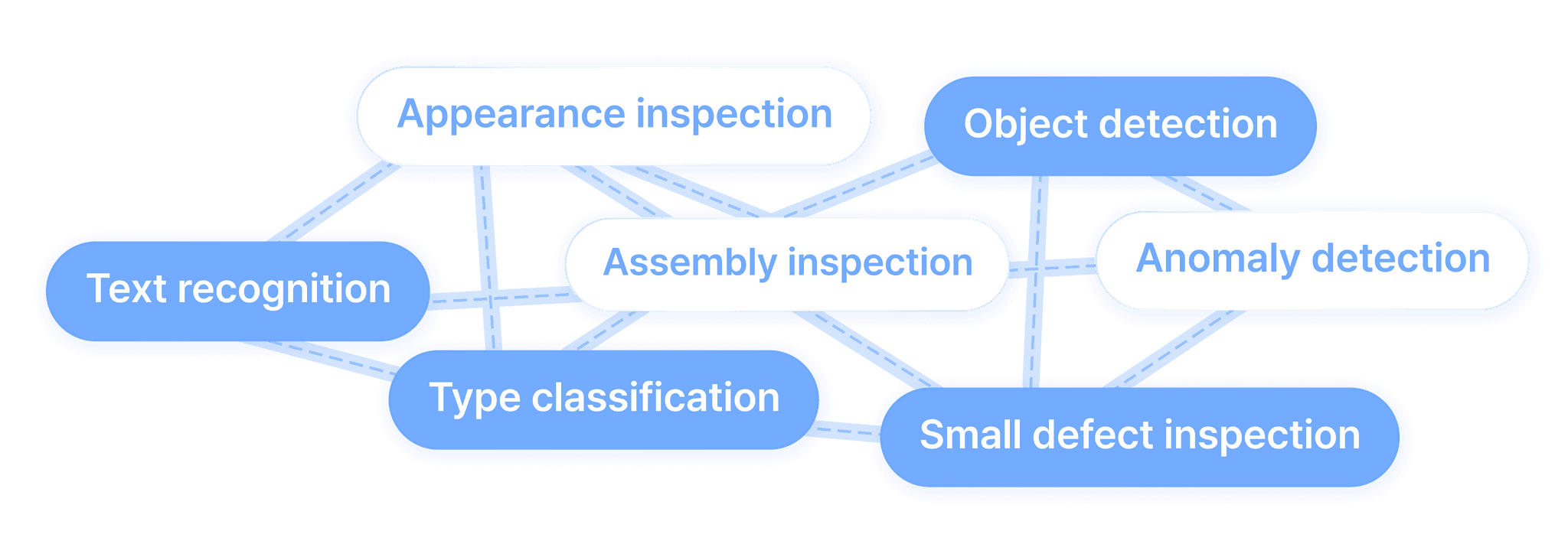
Tackle complex projects with 11 Auto Deep Learning vision inspection models, the largest selection in the industry.
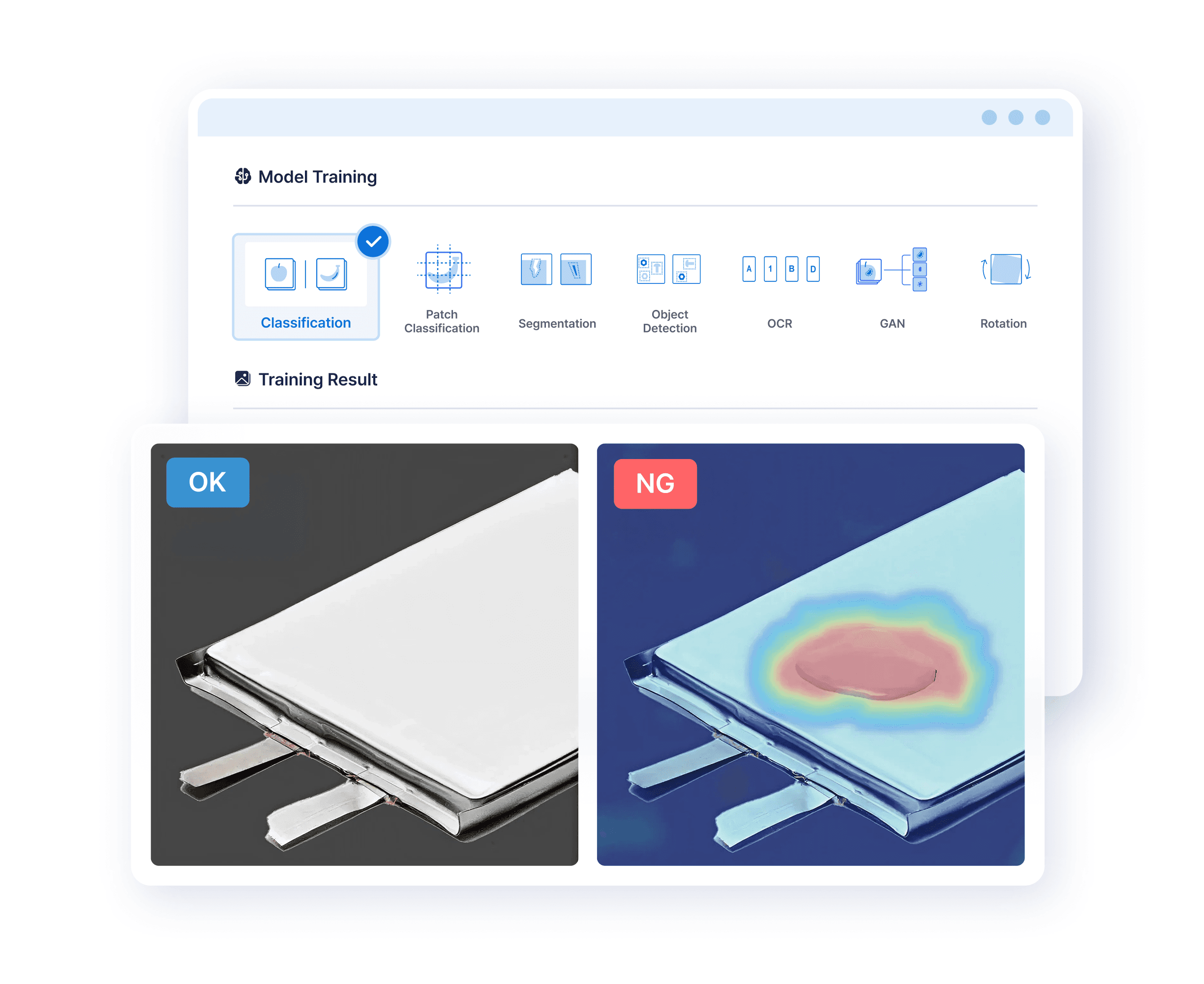
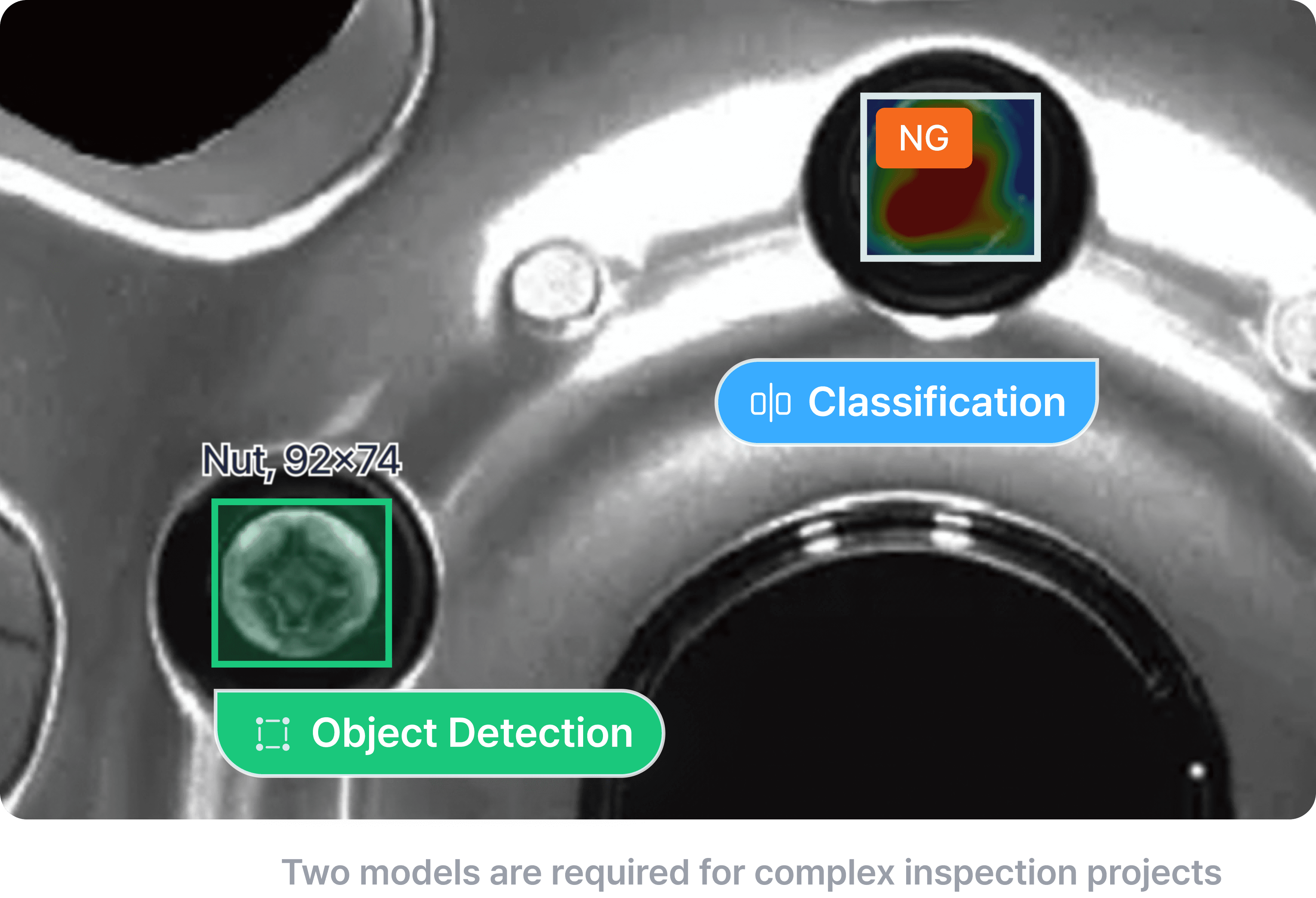
Manufacturing sites are facing increasingly complex projects requiring more than one model to solve.
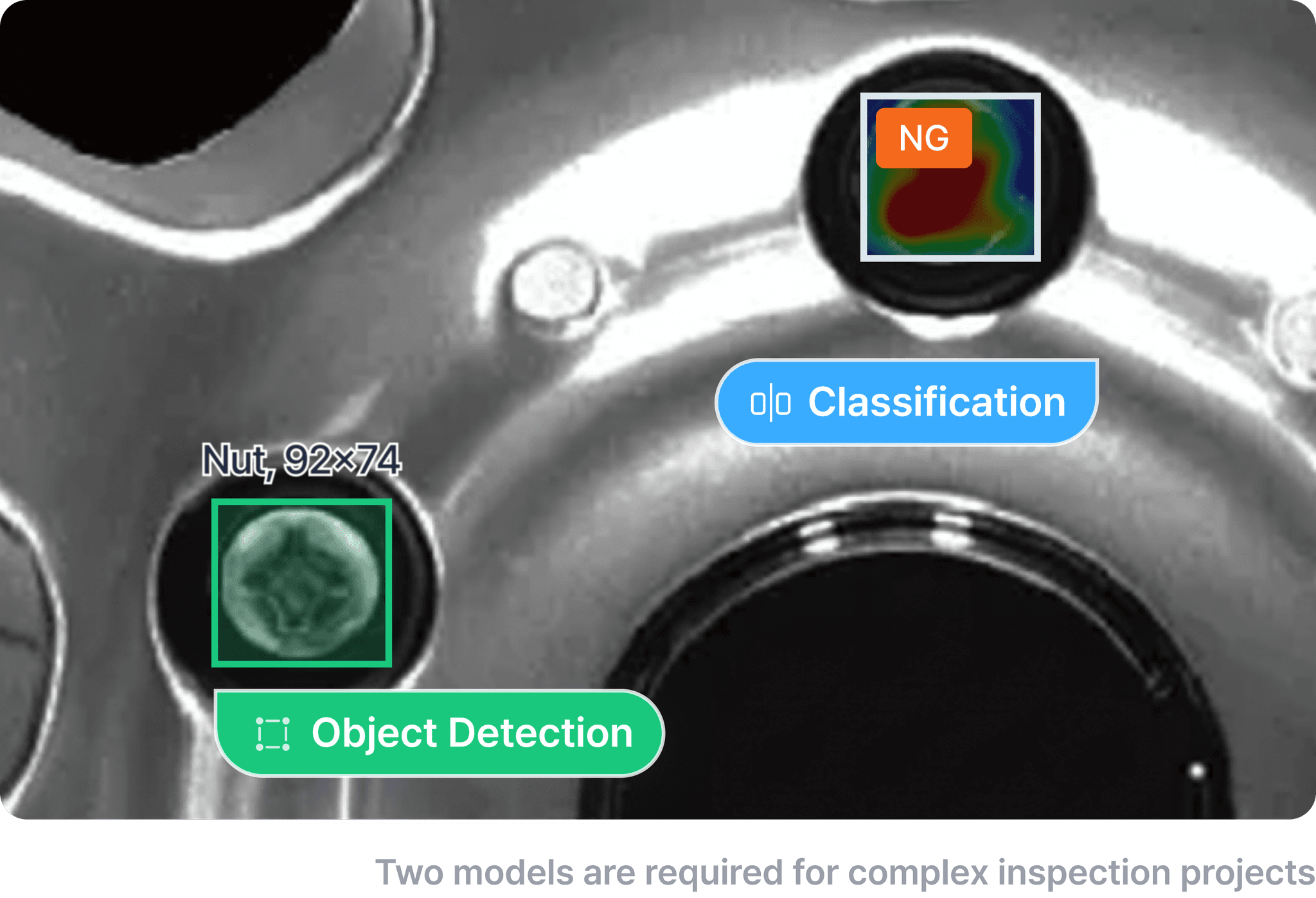
Manufacturing sites are facing increasingly complex projects requiring more than one model to solve.
Manufacturing sites are facing increasingly complex projects requiring more than one model to solve.
Manufacturing sites are facing increasingly complex projects requiring more than one model to solve.
Classification
Classifies images to multiple defect categories.
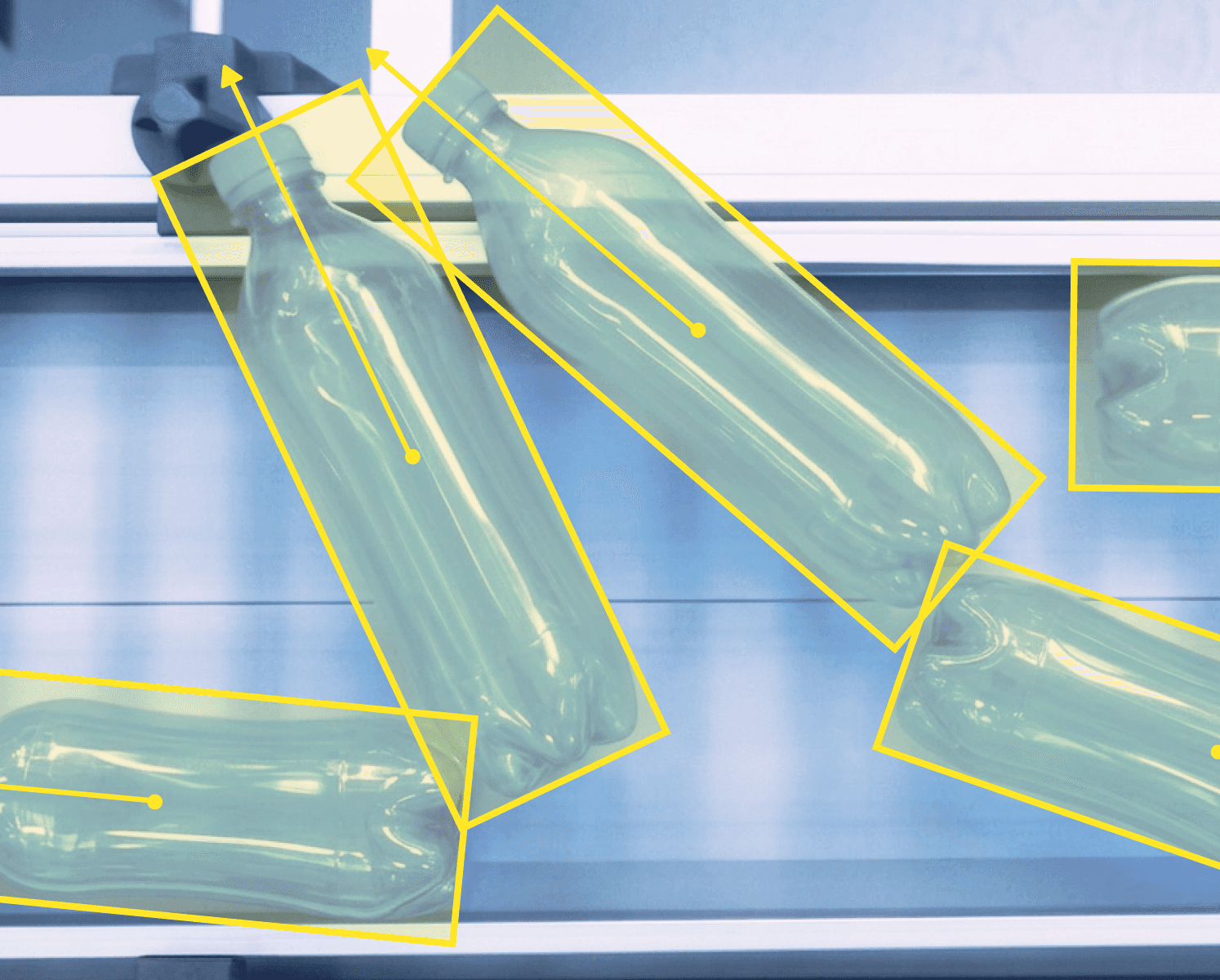
Oriented Object Detection
Detects the number and locations of objects with varying orientations.
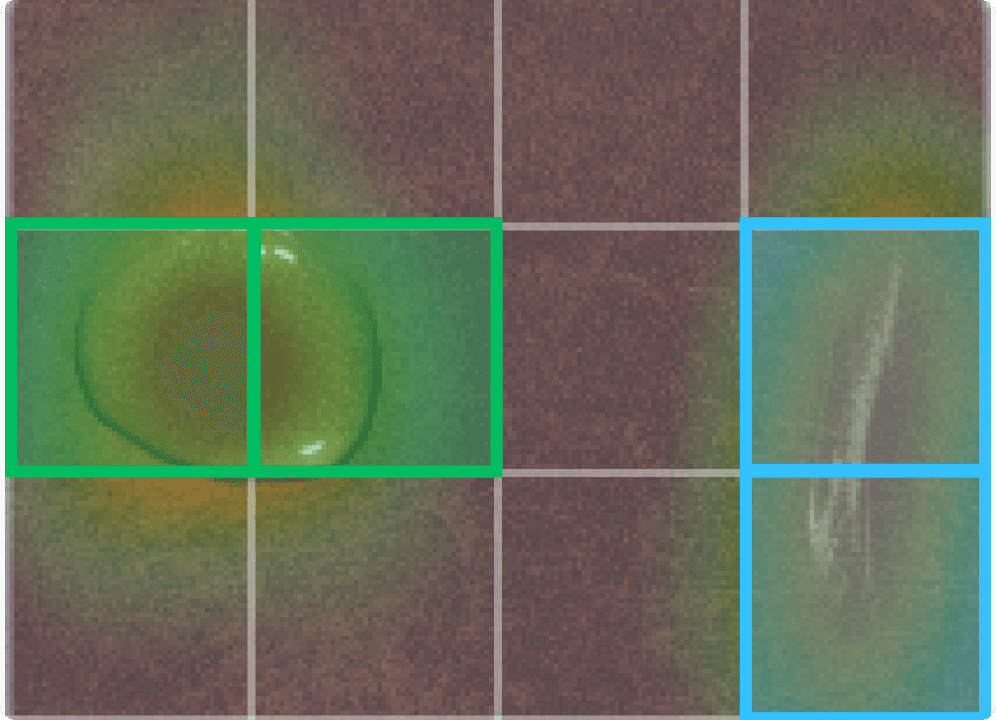
Patch Classification
Classifies high-resolution images by dividing them into small patches.
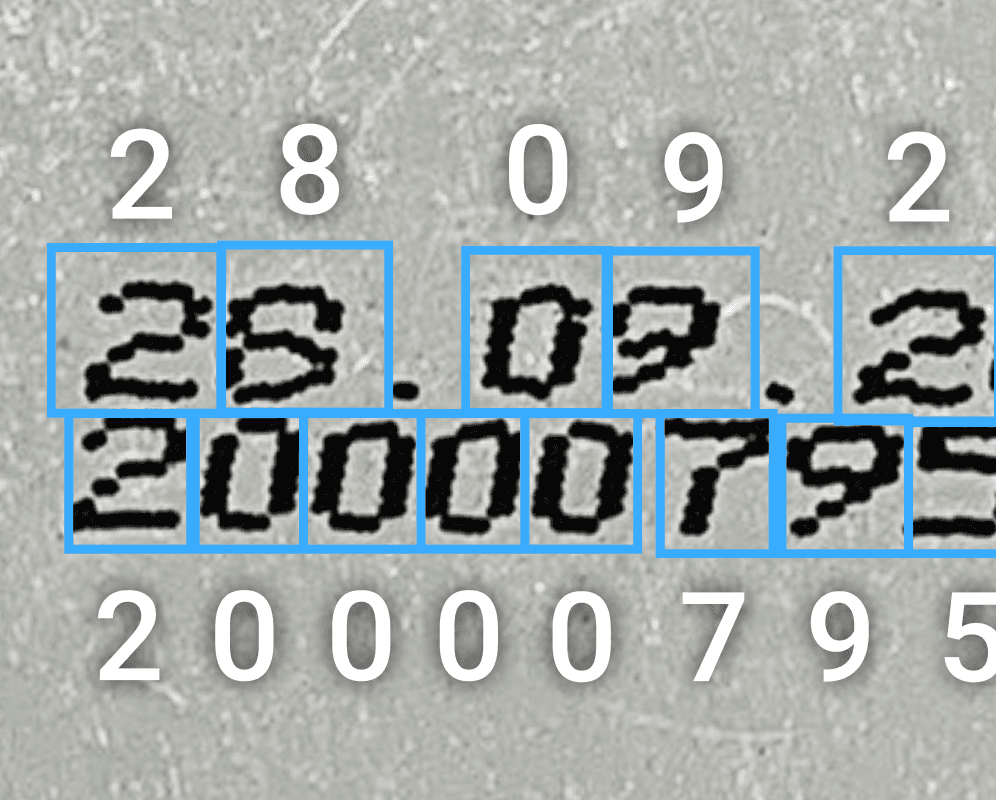
Optical Character Recognition
Recognizes text (English, Numbers, Special Characters) within images.
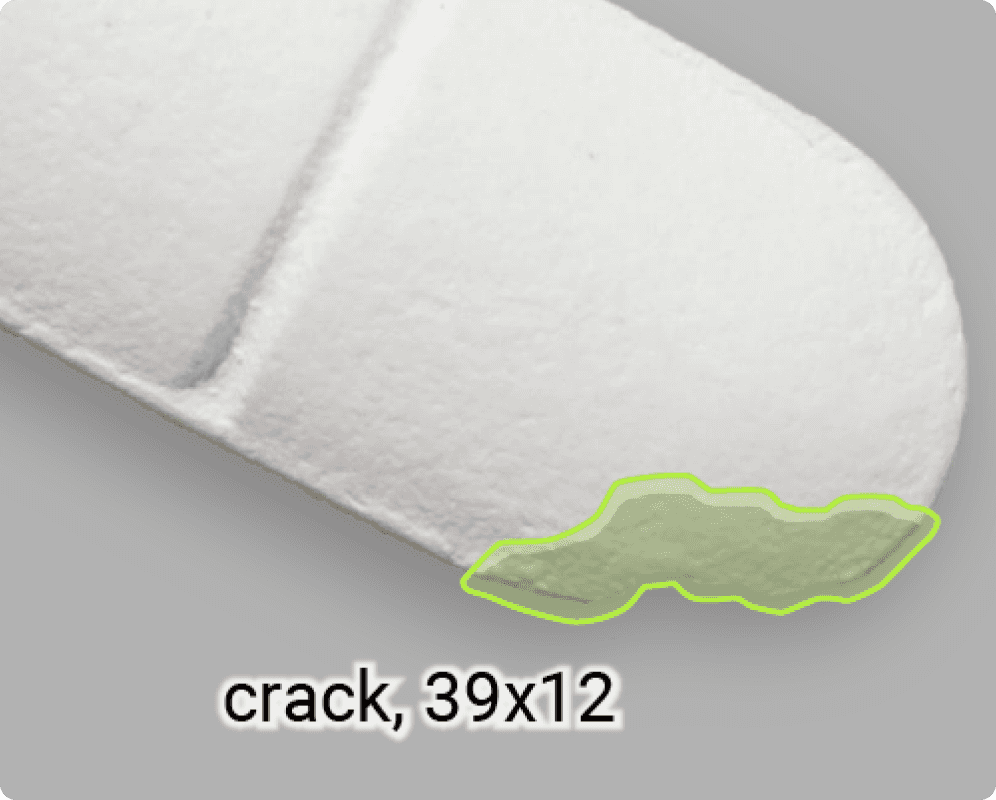
Segmentation
Detects the precise shape and location of defects at the pixel level.
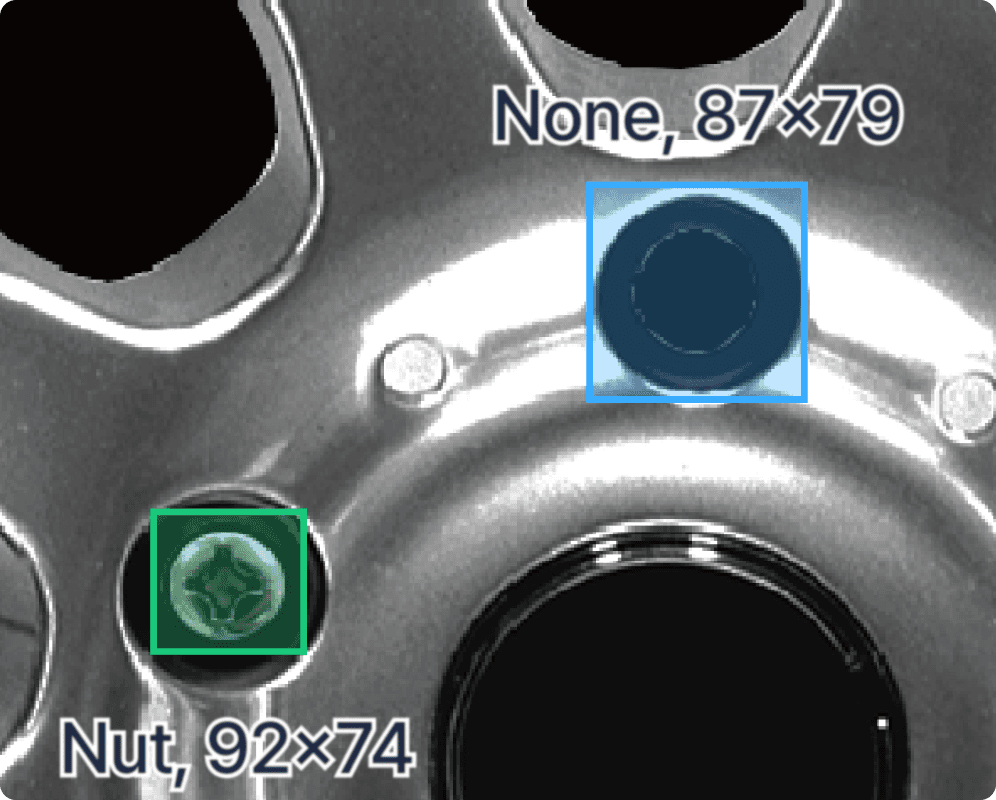
Object Detection
Detects the number of objects and their locations within images.
Classification
Classifies images to multiple defect categories.
Object Detection
Detects the number of objects and their locations within images.
Patch Classification
Classifies high-resolution images by dividing them into small patches.
Oriented Object Detection
Detects the number and locations of objects with varying orientations.
Segmentation
Detects the precise shape and location of defects at the pixel level.
Optical Character Recognition
Recognizes text (English, Numbers, Special Characters) within images.
Classification
Image classification model for multiple defect types.
Segmentation
Detects the precise shape and location of defects at the pixel level.
Oriented Object Detection
Detects the number and locations of objects with varying orientations.
Patch Classification
Classifies high-resolution images by dividing them into small patches.
Object Detection
Detects the number of objects and their locations within images.
Optical Character Recognition
Recognizes text (English, Numbers, Special Characters) within images.
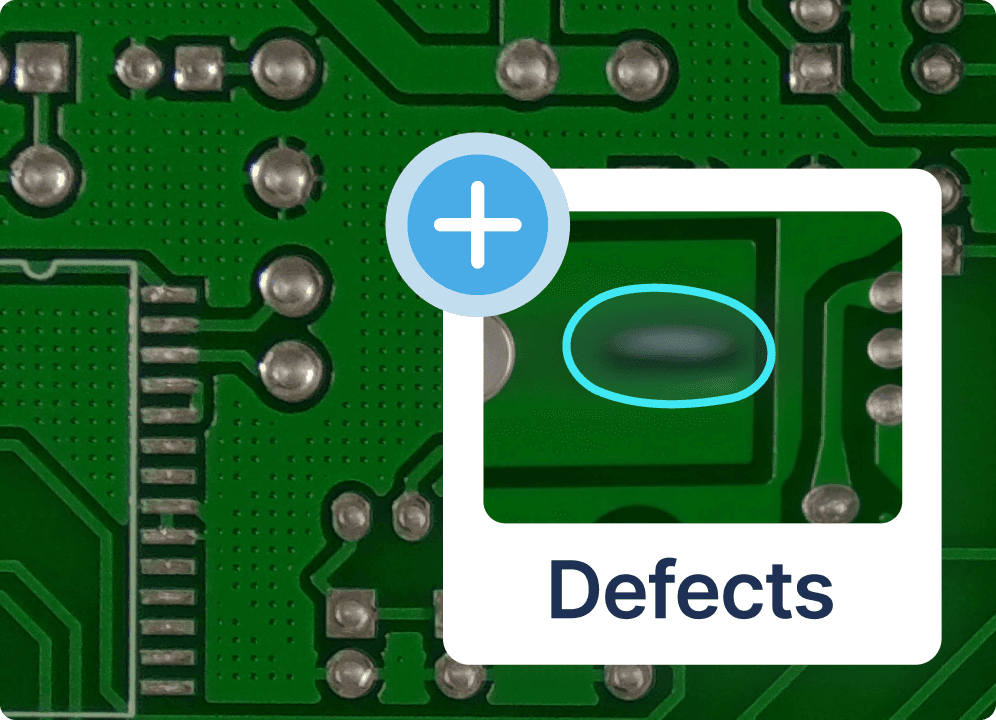
GAN (Defect Generator)
Generates synthetic defect images resembling actual defects.

Image Enhancement
Converts low-quality images into high-quality images.

Rotation
Automatically rotates original images to the correct orientation.
GAN (Defect Generator)
Generates synthetic defect images resembling actual defects.
Image Enhancement
Converts low-quality images into high-quality images.
Rotation
Automatically rotates original images to the correct orientation.
GAN (Defect Generator)
Generates synthetic defect images resembling actual defects.
Rotation
Automatically rotates original images to the correct orientation.
Image Enhancement
Converts low-quality images into high-quality images.
Rotation
A preprocessing model that rotates images to the correct orientation.
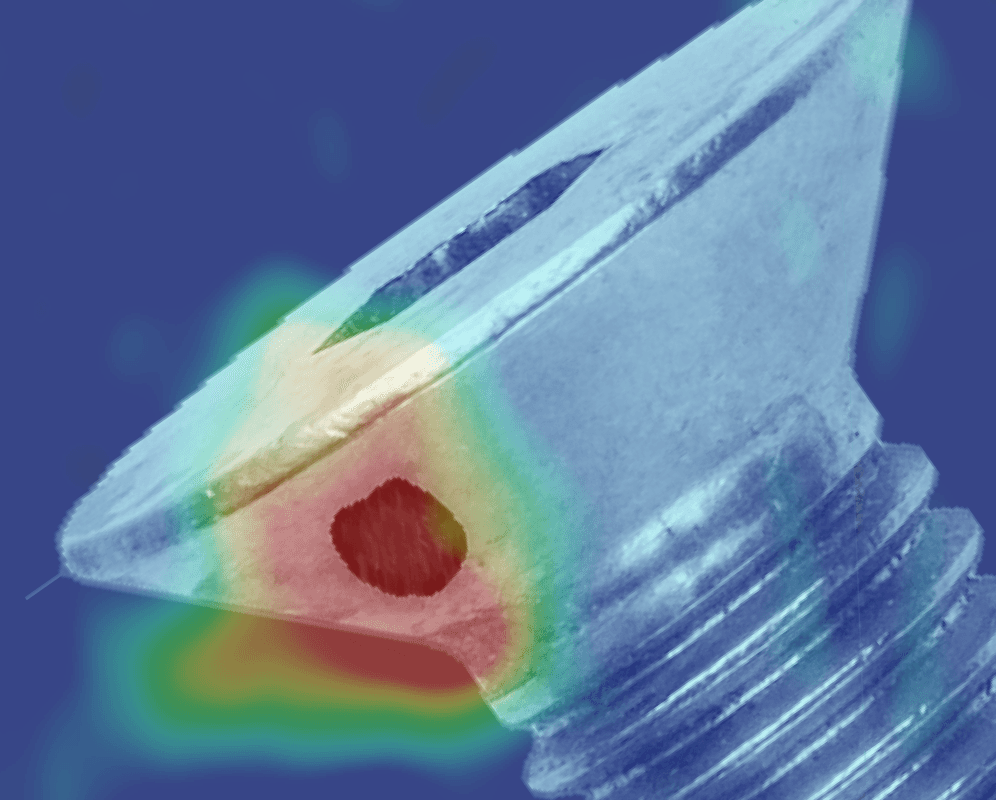
Anomaly Classification
Classifies normal/anomaly images in the form of a heatmap, trained solely with normal images.
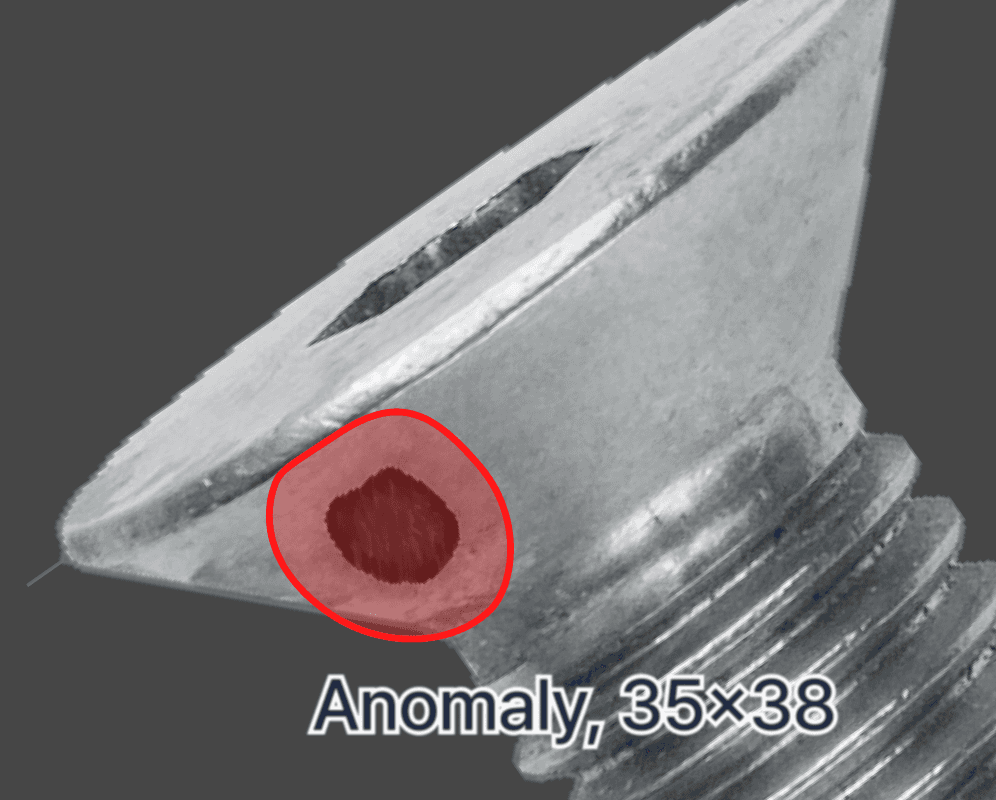
Anomaly Segmentation
Detects precise anomalous regions at the pixel level, trained solely with normal images.
Anomaly Classification
Classifies normal/anomaly images in the form of a heatmap, trained solely with normal images.
Anomaly Segmentation
Detects precise anomalous regions at the pixel level, trained solely with normal images.
Anomaly Classification
Classifies normal/anomaly images in the form of a heatmap, trained solely with normal images.
Anomaly Segmentation
Detects precise anomalous regions at the pixel level, trained solely with normal images.
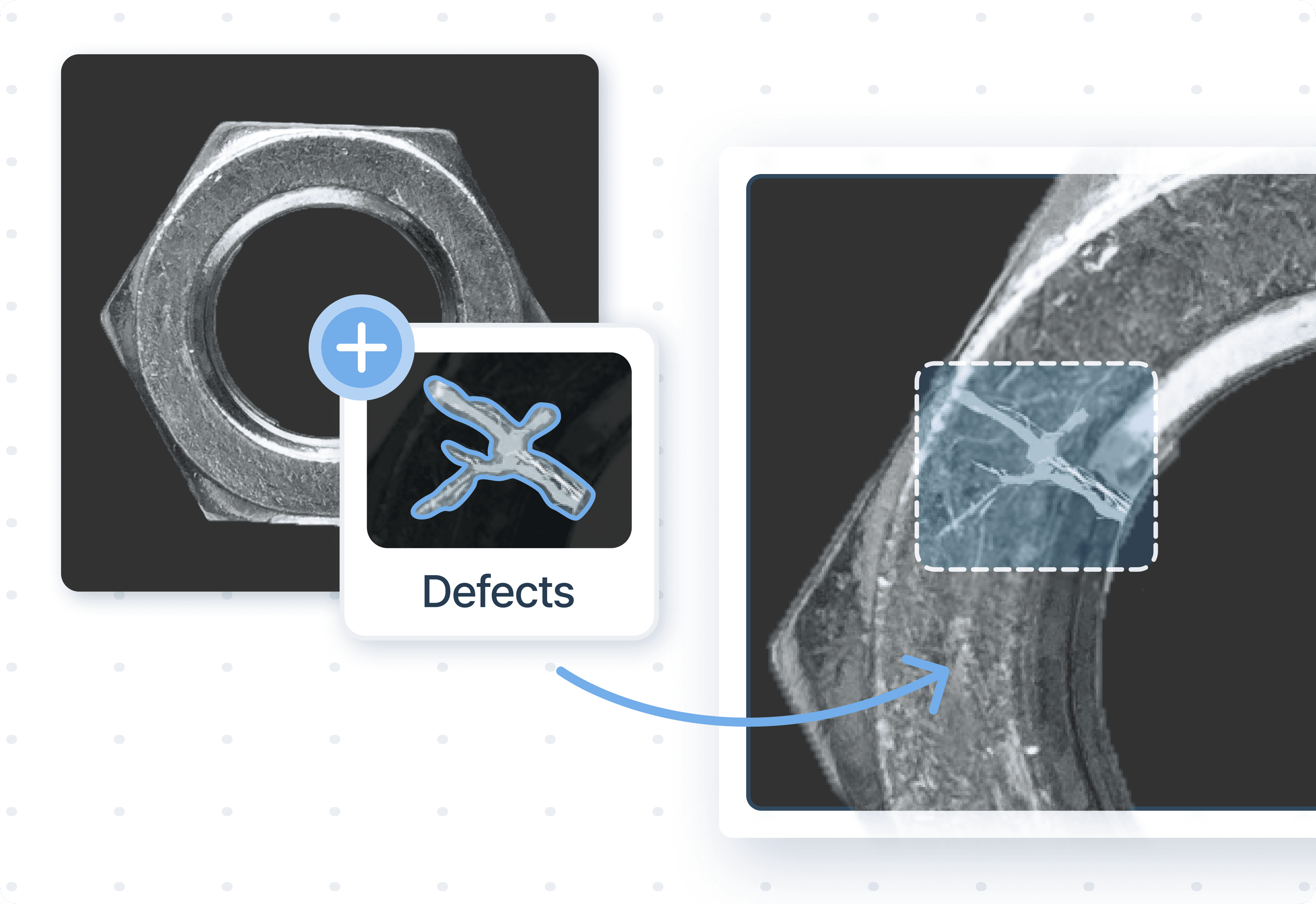
Generate synthetic defect images that closely resemble actual defect with the Generation Center.
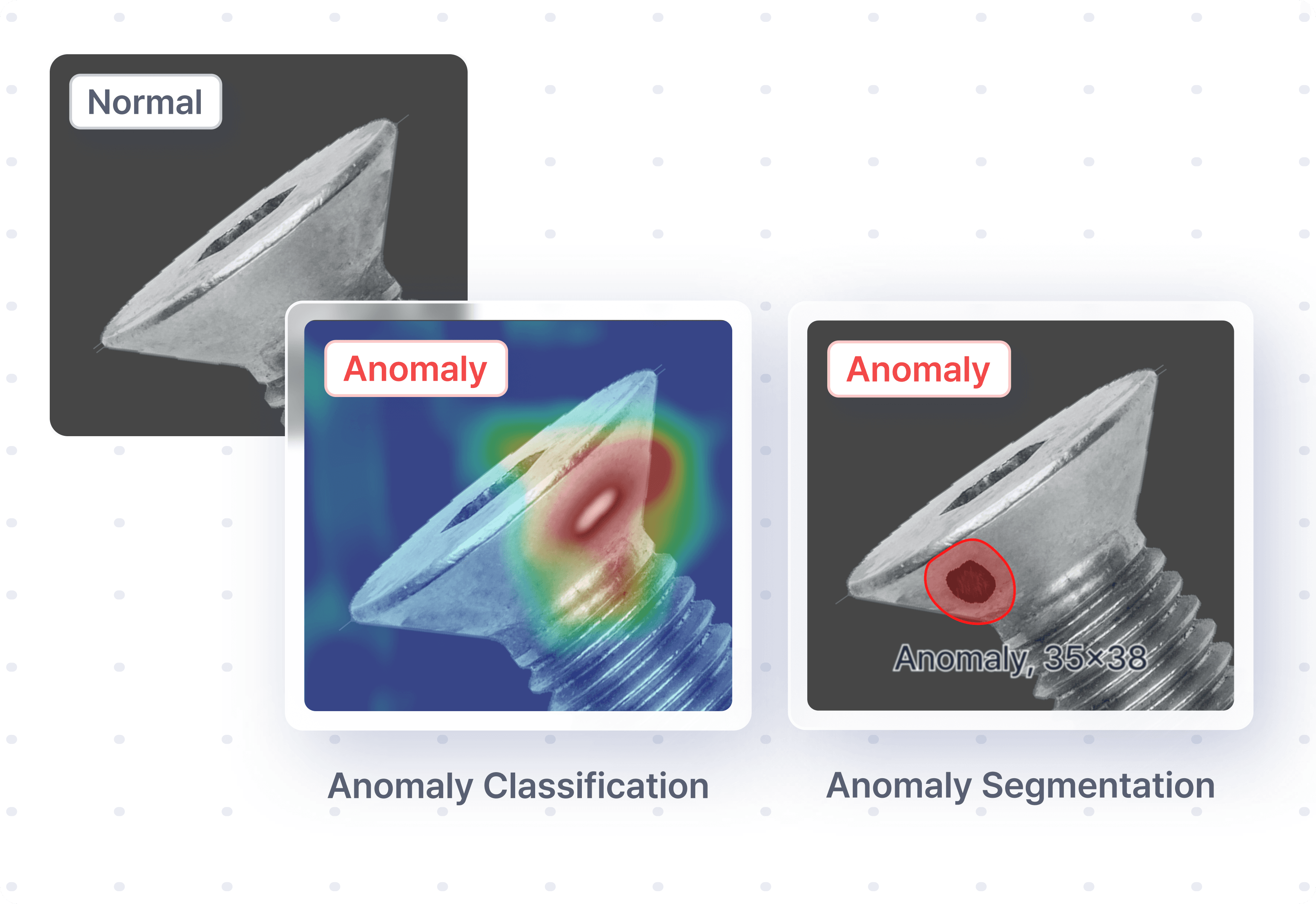
Train models only with normal images for high-performance deep learning inspection even with limited defect data.
Train models with normal images only for high-performance deep learning inspection even with limited defect data.
Generate synthetic defect images that closely resemble actual defect with the Generation Center.
Train models only with normal images for high-performance deep learning inspection even with limited defect data.
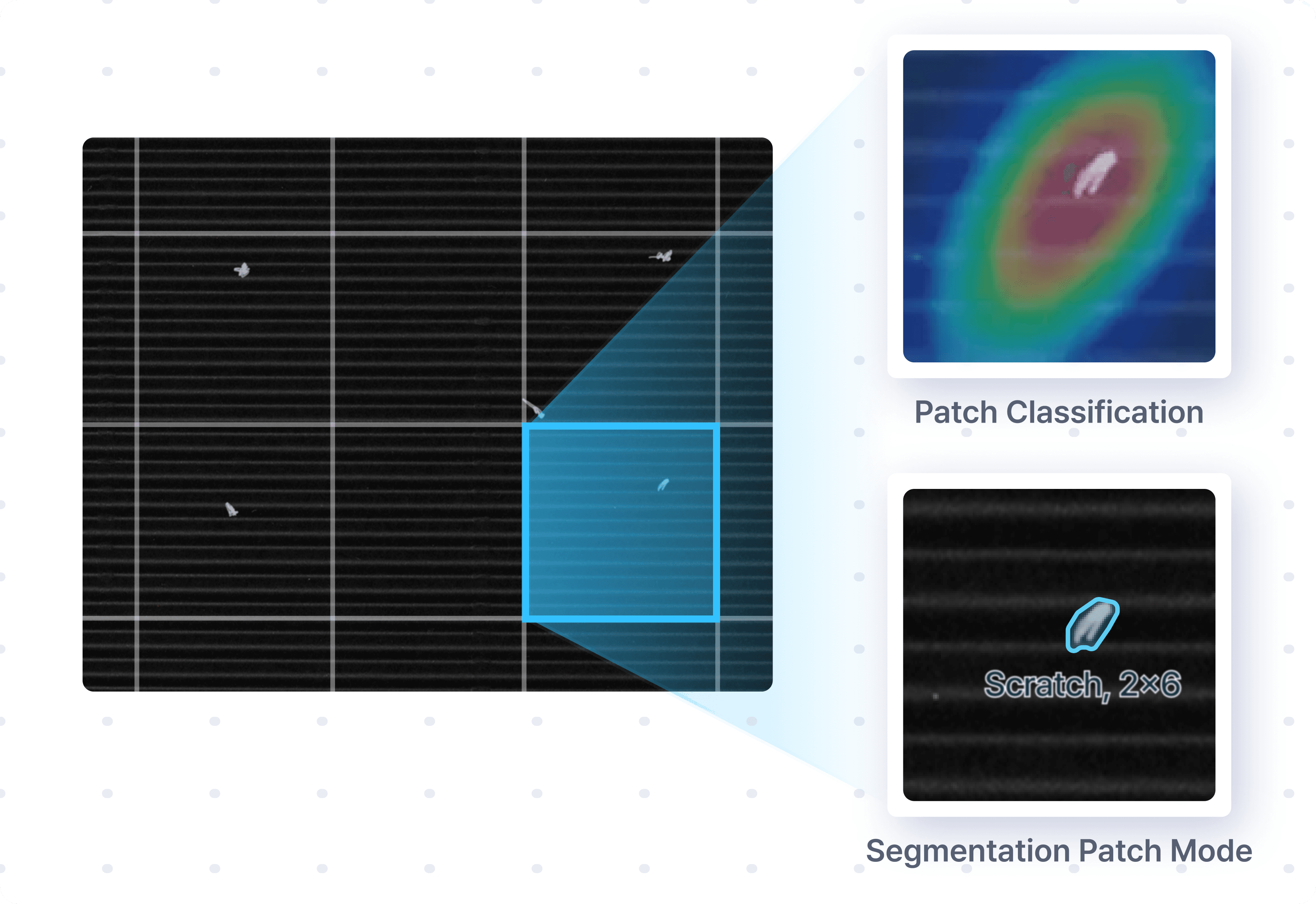
Classify normal and defective regions without defect information loss by splitting high-resolution images into multiple patches.
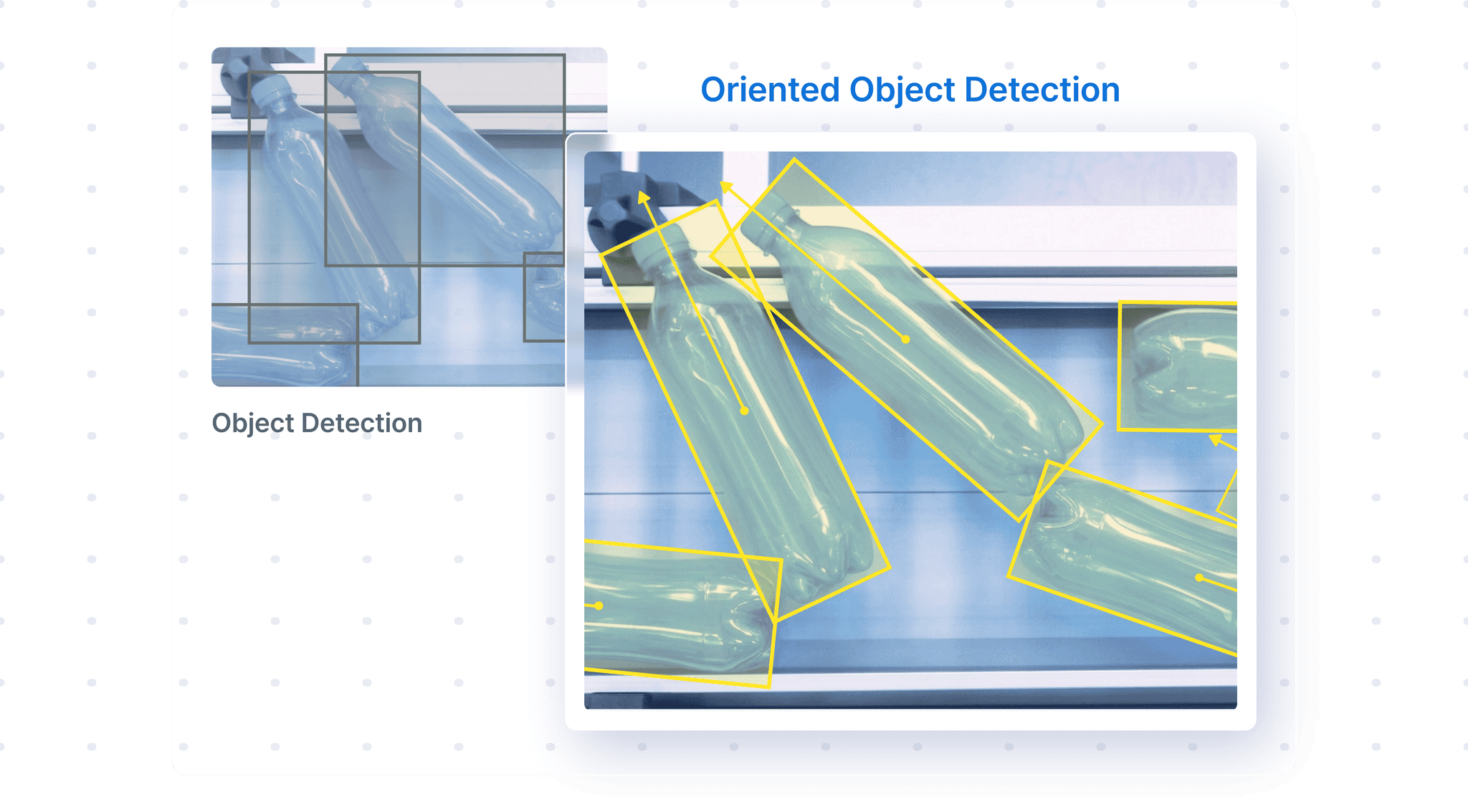
Recognizes the number of objects and identifies their locations, even with varying orientations.