Press release
Neurocle Launches Version 4.5 of Auto Deep Learning Vision Software
Achieving Both Speed and Efficiency
Success manufacturing environments, the performance of deep learning models is a critical factor that determines the success of a project. As a result, demand continues to grow for faster development of more precise and advanced models. In response to this trend, Neurocle last week unveiled version 4.5 of its Auto Deep Learning vision software, Neuro-T, along with its runtime library, Neuro-R.
Neuro-T is a software solution that enables users to easily build high-performance deep learning models based on Auto Deep Learning algorithms, while trained models can be deployed through Neuro-R to detect defects in real time. The 4.5 update introduces a range of new features designed to support the development of more precise and sophisticated models, including improved inference speed, additional auto-labeling options, designated regions for synthetic defect generation, and expanded threshold types.
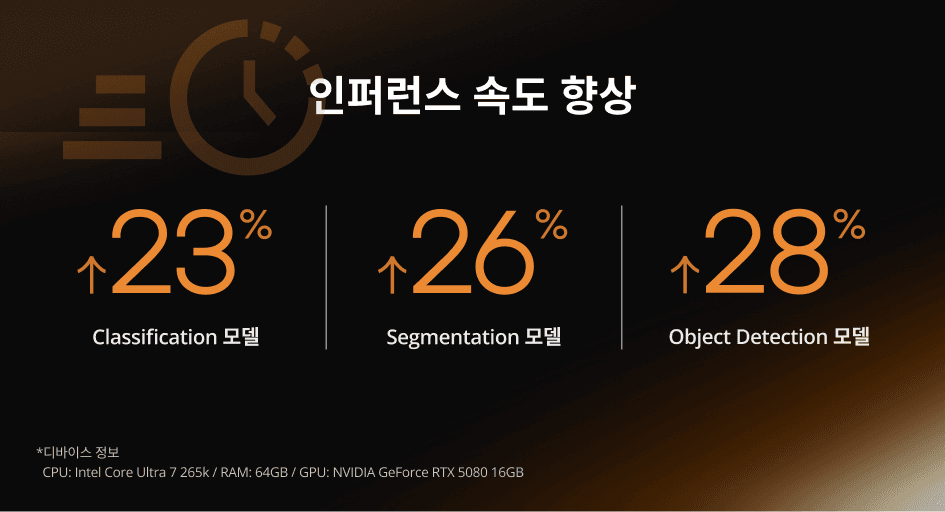
Up to 28% Improvement in Model Inference Speed
The overall inference speed of Neuro-R has been significantly enhanced, reducing the time required to obtain results in manufacturing environments. According to Neurocle, inference speed has improved by more than 23% for classification models, 26% for segmentation models, and 28% for object detection models. This enables faster detection even in production lines where inspection speed is critical.
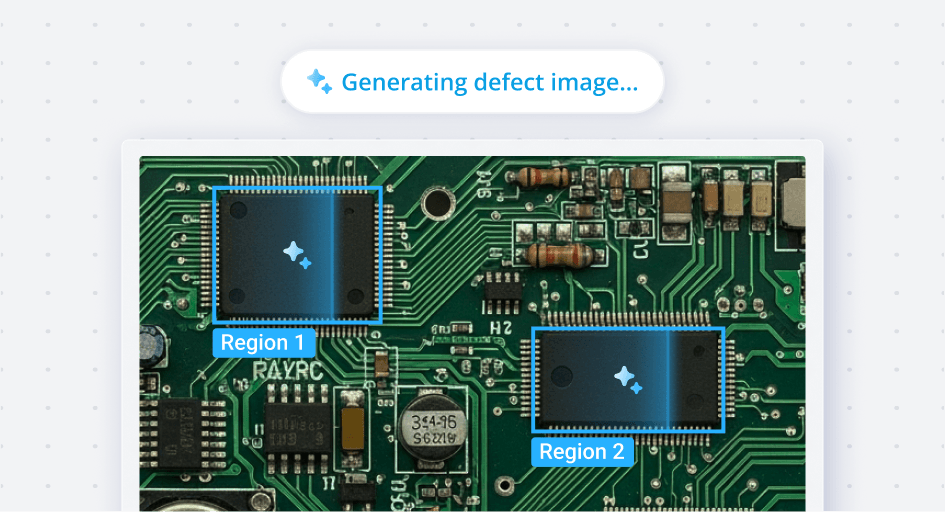
More Sophisticated Synthetic Defect Image Generation
A new feature has been added to the Generation Center, allowing users to designate multiple specific regions for synthetic defect generation. This makes it possible to create defect images only in targeted areas, enabling the acquisition of data that closely resembles real defects, particularly in regions where defects are more likely to occur.
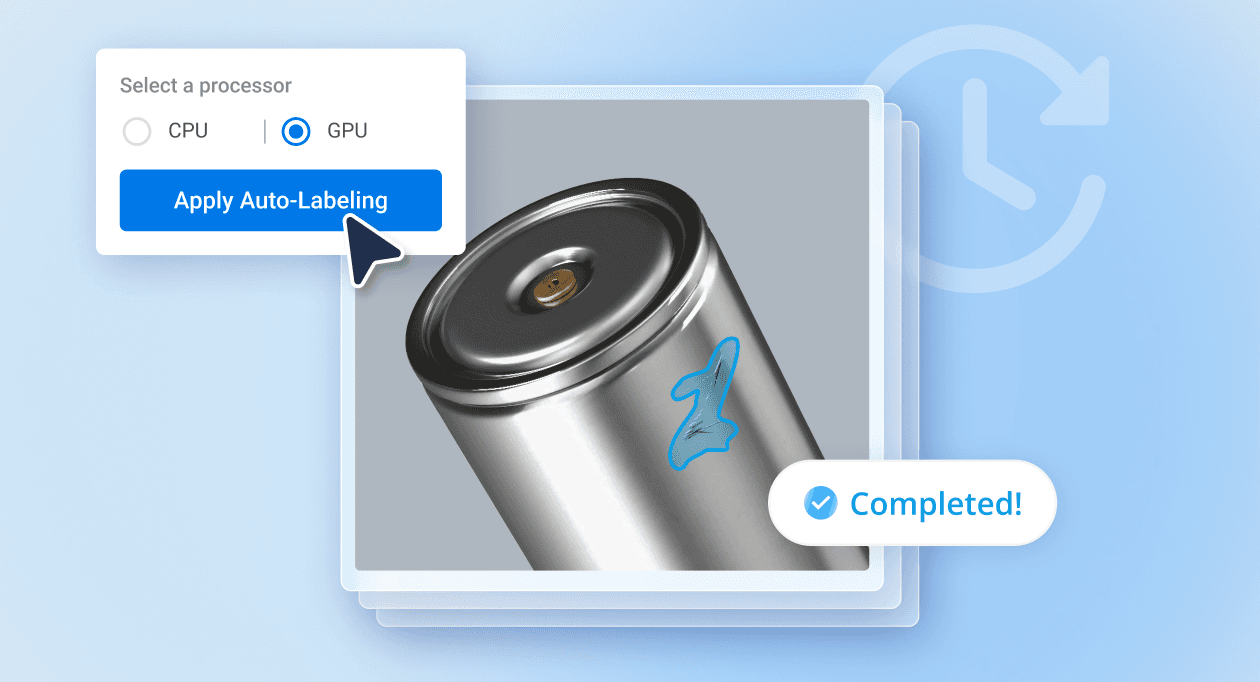
Accelerated Labeling with GPU-Based Processing
The fully automated labeling feature now includes an option to select between CPU and GPU resources. By leveraging GPU-based labeling, users can achieve speeds up to 7.6 times faster than CPU-based processing. This is expected to significantly improve efficiency in manufacturing environments that handle large-scale datasets consisting of thousands or even tens of thousands of images.
Furthermore, segmentation models now support threshold settings based not only on size and probability, but also on the average grayscale value of pixels. A new feature has also been introduced to limit the maximum time allocated for model inference, helping to minimize productivity losses caused by inference delays in on-site operations.
Hongsuk Lee, CEO of Neurocle, stated, “Version 4.5 of Neuro-T and Neuro-R is focused on enabling faster and more precise development of high-performance deep learning models in real-world environments. We expect this to contribute significantly to improving productivity across manufacturing processes.”